
Shedding Light on Phototherapy
Skin diseases can significantly affect a person’s comfort, confidence, and quality of life. For many chronic skin conditions, phototherapy has emerged as a safe, effective, and well-established option. Often described as “light therapy,” phototherapy uses controlled exposure to ultraviolet (UV) light to treat a variety of skin disorders.
What Is Phototherapy?
Phototherapy is a medical treatment in which the skin is exposed to specific wavelengths of ultraviolet light under supervised conditions. Unlike natural sunlight, phototherapy is carefully measured doses of a narrow wavelength of UVB as ordered by your dermatologist.
It is delivered via state-of-the-art medical-grade equipment by trained personnel. The treatment is performed in our dermatology office and may require multiple sessions over several weeks to months.
How Does Phototherapy Work?
Ultraviolet light affects the skin at a cellular level. Depending on the condition being treated, phototherapy can:
Slow down the rapid growth of skin cells
Reduce inflammation
Suppress overactive immune responses in the skin
Relieve itching and redness
By targeting these underlying processes, phototherapy helps control both symptoms and signs of various skin diseases to hopefully achieve longer-term control.
Skin Conditions Treated with Phototherapy
Phototherapy is often recommended when topical treatments are ineffective or not well tolerated, and a more full-body approach is needed. Conditions that can be treated with it include:
Psoriasis
Vitiligo
Atopic dermatitis (eczema)
Lichen planus
Pruritus (chronic itching)
Cutaneous T-cell lymphoma
Pityriasis rosea and other inflammatory skin disorders
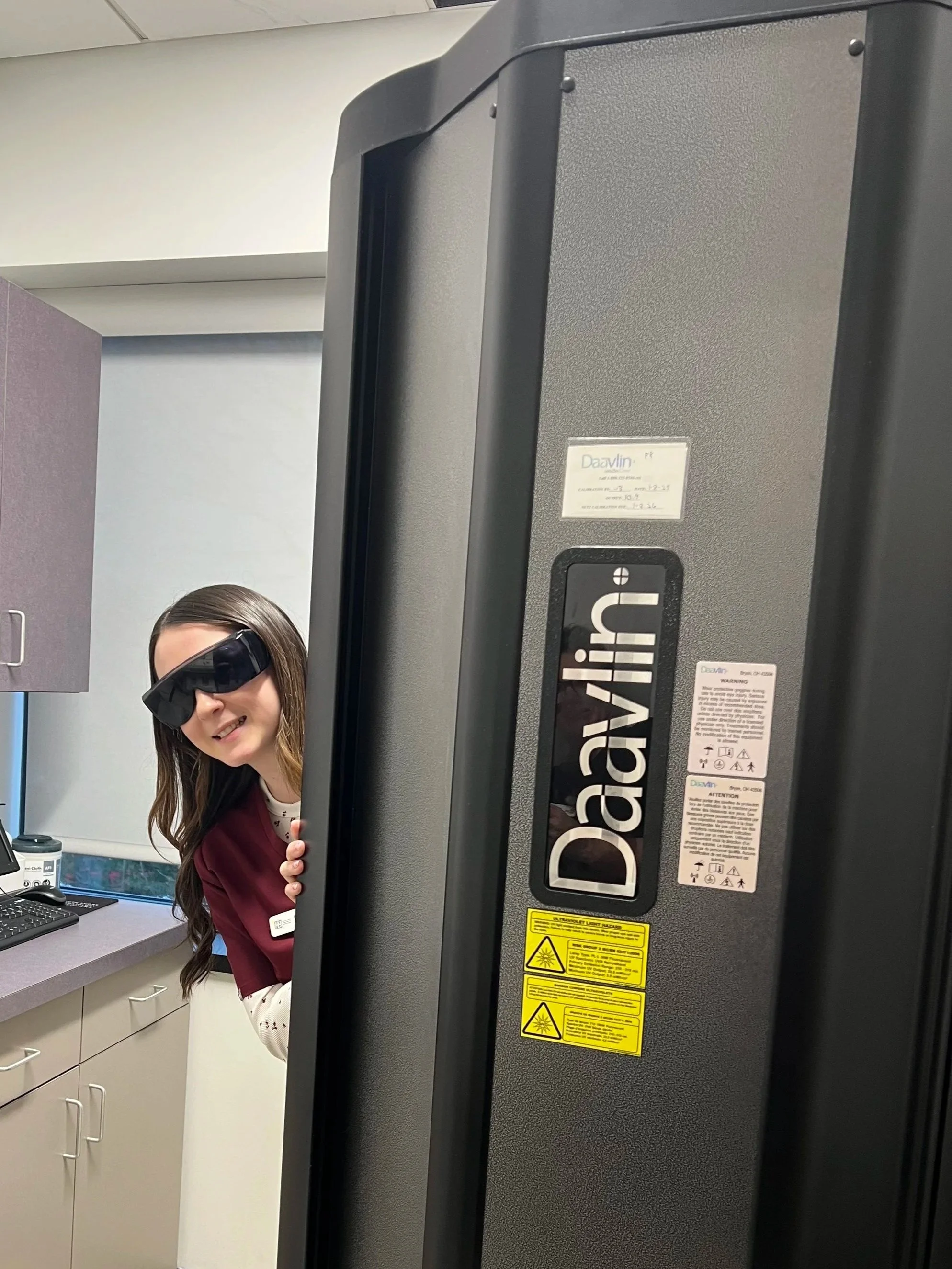
Brittany, SSDP nurse, with Narrowband Ultraviolet B (NB-UVB) phototherapy unit
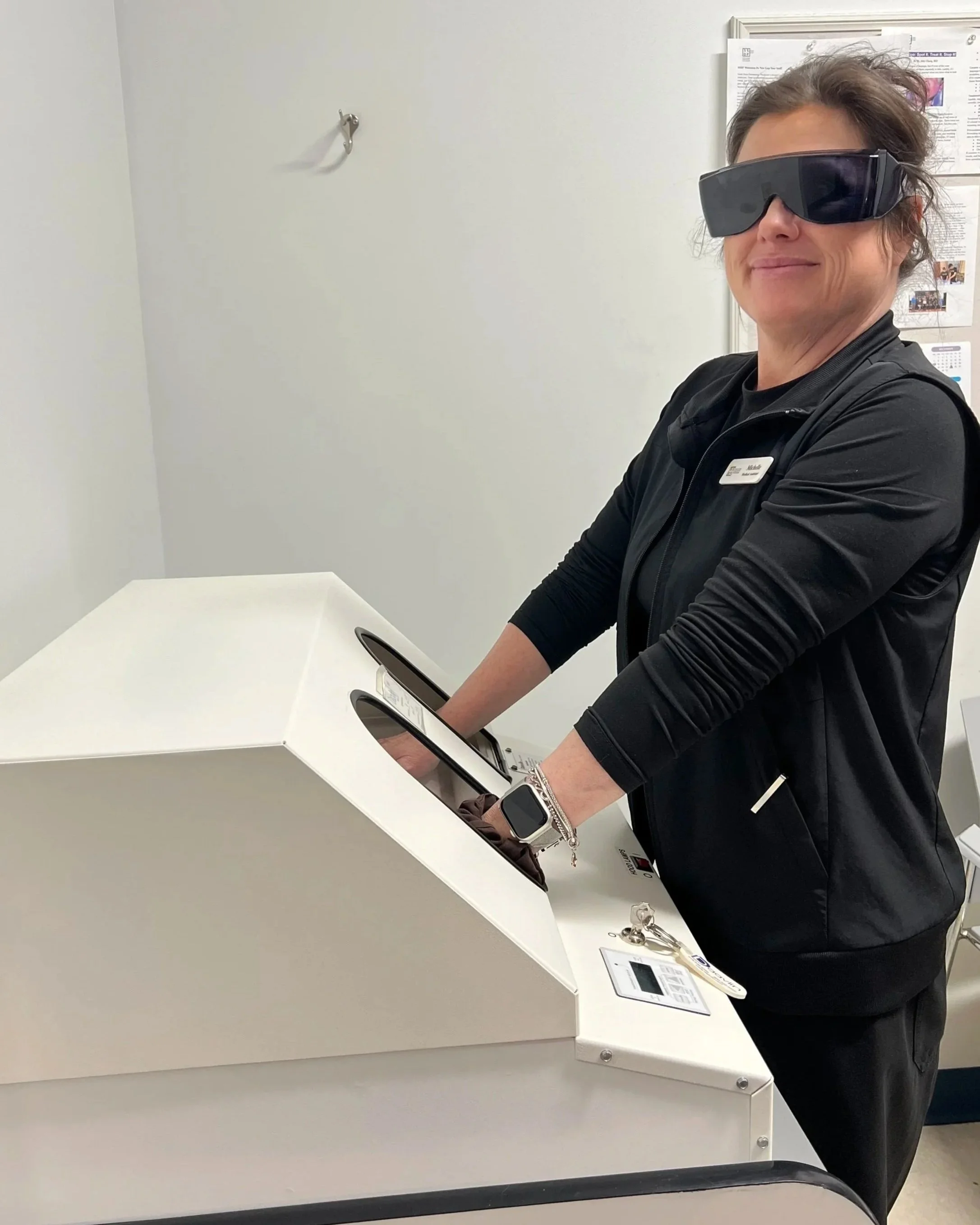
Michelle, SSDP medical assistant, with Narrowband Ultraviolet B (NB-UVB) phototherapy hand unit
Benefits and Possible Side Effects
Benefits of phototherapy include:
It’s a non-invasive treatment
It’s a drug-sparing option, reducing the need for systemic medications
It’s effective for chronic conditions
It’s suitable for children and adults
It can lead to long-lasting remission in some patients
It’s usually covered by insurance
Possible side effects include:
Mild redness or sunburn-like reactions
Dry or itchy skin
Temporary tanning
Sun damage
What to Expect During Treatment
Keep in mind that phototherapy requires in-office visits, and improvement is usually gradual.
A typical phototherapy session initially lasts seconds and then advances to minutes. Patients may need treatments two to three times per week for multiple weeks. Protective eyewear is used, and unaffected areas may be covered or treated with sunscreen to prevent unnecessary exposure. Consistency produces the best results.
Is Phototherapy Right for You?
Phototherapy has been a cornerstone in dermatological treatment for decades. With proper medical guidance, phototherapy can be a safe, effective, and life-changing treatment option.
However, it is not suitable for everyone. People with certain medical conditions, photosensitivity disorders, or a history of skin cancer may require alternative treatments. Patients with skin types that burn easily may not tolerate this treatment.
Your board-certified dermatologist can determine whether phototherapy is right for you based on your skin type, condition, and medical history.
Any questions? Consult one of our board-certified dermatologists. Please contact SSDP to schedule an appointment with any of our physicians.