
Melanoma Monday: Advancing Awareness, Prevention, and Early Detection
Author Credit: Hannah Hamdani, SSDP Dermatologist Assistant
Established by the American Academy of Dermatology, Melanoma Monday, observed on the first Monday of May, is a national initiative to raise awareness of melanoma, the most serious and potentially fatal form of skin cancer.
Melanoma Monday serves as a reminder to remain vigilant, practice sun safety, and prioritize annual full-body skin examinations. Early detection is not just beneficial—it is lifesaving.
What Is Melanoma?
Melanoma arises from melanocytes, the pigment-producing cells of the skin. Although it accounts for a smaller proportion of skin cancer cases, it is responsible for the majority of skin cancer–related deaths.
How Common Is Melanoma?
Over a lifetime, approximately 1 in 50 Americans will develop melanoma. While it most commonly appears on sun-exposed skin, it can occur anywhere on the body, including the scalp, nails, eyes (ocular melanoma), and mucosal surfaces.
According to the American Cancer Society, more than 112,000 new invasive melanoma cases are expected annually in the United States, along with over 120,000 cases of melanoma in situ (localized spots without spreading).
Despite advances in treatment, melanoma is projected to cause more than 8,000 deaths per year. Incidence continues to rise, particularly among adults over age 50, though increasing rates are also observed in younger populations.
What We’ve Seen at Our Practice
Recent data at our South Shore dermatology practice highlights the growing burden of melanoma within our own community. As of April 2026, we have diagnosed 72 cases, including 16 in April alone. Since 2015, we have diagnosed nearly 3,000 melanoma cases.
This aligns with broader epidemiologic trends showing that New England, and particularly Massachusetts, has among the highest skin cancer rates in the United States. Specifically, Massachusetts ranks sixth nationwide for skin cancer diagnoses, with rates exceeding the national average.
Contributing factors may include a higher prevalence of fair skin types, more tanning bed use, and inconsistent sun protection habits, despite less intense year-round sun exposure compared to southern states.
Know the Risk Factors
Melanoma risk includes environmental and genetic factors:
Ultraviolet (UV) radiation exposure (sunlight and tanning beds)
Fair skin, light eyes, and a tendency to burn
Family or personal history of melanoma
Presence of numerous or atypical moles
Immunosuppression
Melanoma affects all skin types. In individuals with darker skin tones, it often presents in less sun-exposed areas (palms, soles, nail beds) and may be diagnosed at more advanced stages.

Wearing protective clothing and sunscreen can help reduce your risk of melanoma
Reducing Your Risk
Melanoma is often preventable. Evidence-based strategies include:
Daily use of broad-spectrum sunscreen (SPF 30 or higher)
Wearing protective clothing, hats, and sunglasses
Avoiding peak sun exposure (10 AM–4 PM)
Avoiding indoor tanning
Routine self-exams and annual professional skin checks
Make Early Detection a Priority
Early detection is crucial. When found early, melanoma carries a very favorable prognosis, with five-year survival rates exceeding 98–99% for localized disease.
Patients should monitor for concerning lesions using the ABCDE criteria:
Asymmetry
Border irregularity
Color variation
Diameter greater than 6 mm
Evolution (any change in size, shape, color, or symptoms)
Additionally, the “ugly duckling” sign—a mole that appears different from others—should prompt evaluation by your dermatologist. Symptoms such as itching, tenderness, bleeding, or rapid change are also warning signs.
Melanoma is a significant public health concern, but it’s very treatable when detected early. If you have any concerns, it’s best to see your dermatologist.
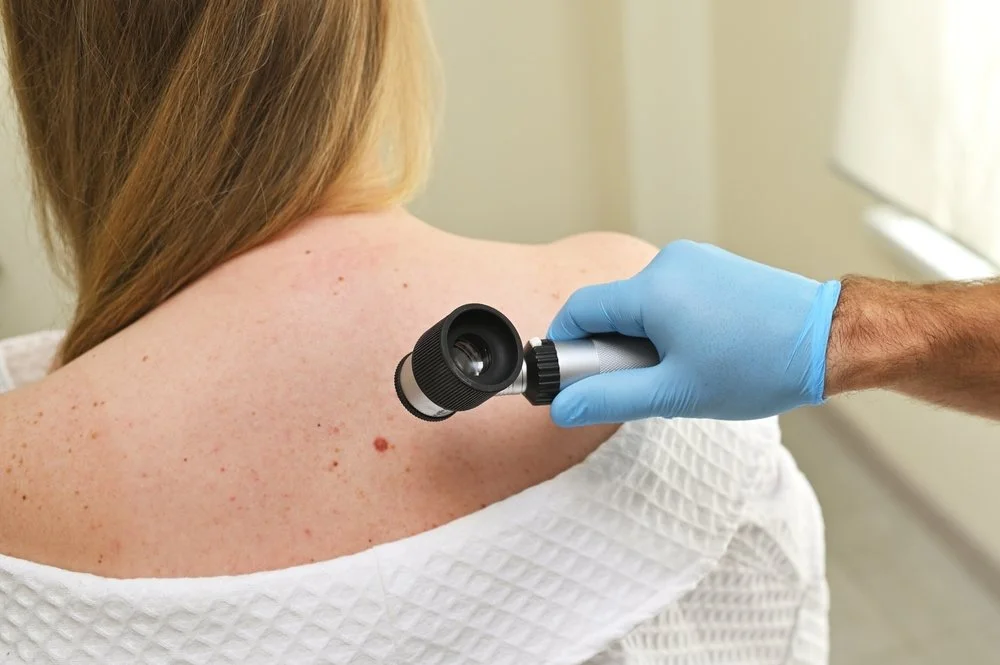
Any questions? Consult one of our board-certified dermatologists. Please contact SSDP to schedule an appointment with any of our physicians.